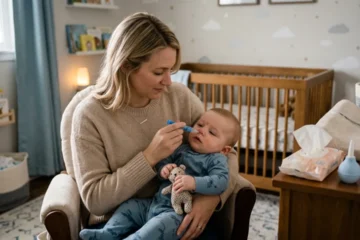
Milestones in Baby Development: Stages and Stimuli
The arrival of a child is a journey full of discoveries. Every small achievement is special for parents and caregivers. They want to see their child grow up healthy.
Baby Development
Learn more about the stages of baby development.
SEE MORE HEREYou will remain on this site.
Understanding your baby's developmental milestones helps you provide the right support. Remember, every child learns and grows in a unique way.
Developmental milestones show the skills that appear early on. By knowing the expected milestones , you can lovingly encourage your child.
This guide was created to help you understand each stage. Let's explore the important steps of this phase of life together.
Key learning points
- Each child grows in their own way.
- Observation helps to strengthen the emotional bond.
- Stimulating motor skills helps with autonomy.
- The first year brings many rapid changes.
- Knowing the steps brings peace of mind to parents.
- The right support is essential for learning.
What are the milestones of child development?
Child developmental milestones serve as a guide for parents. They show skills that children typically possess at certain ages. This helps to understand how your child is developing.
These indicators are crucial for seeing if your child is developing well. They cover several important areas that grow together:
- Motor skills: body movements and coordination.
- Cognitive abilities: how a baby learns and solves problems.
- Social interaction: how the child relates to the people around them.
- Language: the evolution of communication, from gestures to the first words.
It's essential to understand that these milestones aren't deadlines to be met. Every child grows uniquely. Small variations are normal.
Observing development by age helps you see your baby's progress. This brings peace of mind. It allows you to celebrate each milestone and provide the necessary support for your little one to explore the world.
Dealing with anxiety and the trap of comparisons.
Watching your child grow is a unique experience. But social pressure can cause doubts. It's normal to worry when other children achieve things your child hasn't yet. However, child development doesn't follow a single plan for everyone.
Comparing babies to others is a common trap. It can steal the joy from everyday moments. By focusing too much on other children, you ignore your own child's achievements. This fuels maternal anxiety and creates insecurity.
Every baby grows uniquely, influenced by genes and environment. Instead of comparing them to others, observe your child's progress. Valuing individual effort creates a more supportive family environment.
See the difference between focusing on comparisons and individual development in the table below:
| Appearance | Focus on Comparison | Focus on Individual Development |
|---|---|---|
| Source of motivation | Performance of other children | Baby's own progress |
| Emotional state | Increased maternal anxiety | Confidence and tranquility |
| Process overview | Pressure for quick results | Respect for biological time |
| Final result | Unnecessary frustration | Celebrating every achievement |
Managing maternal anxiety requires self-awareness and patience. Child development is a marathon, not a sprint. Avoiding comparisons helps your child grow emotionally.
By clicking the button you will remain on this site.
Baby Development Milestones: The First Trimester

The first six months of life are full of changes for your baby. During this phase, motor development grows rapidly. This allows the baby to make more coordinated and intentional movements.
Seeing these growth stages helps you understand how your child's body prepares for new challenges. From neck control to the first social smile, each milestone is important.
By observing the milestones of the first semester , you will see changes in the baby's interaction with the world. Here are some key skills from this phase:
- Head support: In about three months, the baby learns to hold its head up when placed on its stomach.
- Scrolling: Between the fourth and sixth month, many babies learn to roll from their tummy to their back and vice versa.
- Social interaction: A social smile emerges as a clear response to their face and voice, strengthening the emotional bond.
- Hand coordination: The baby starts putting objects in their mouth and holding toys more firmly.
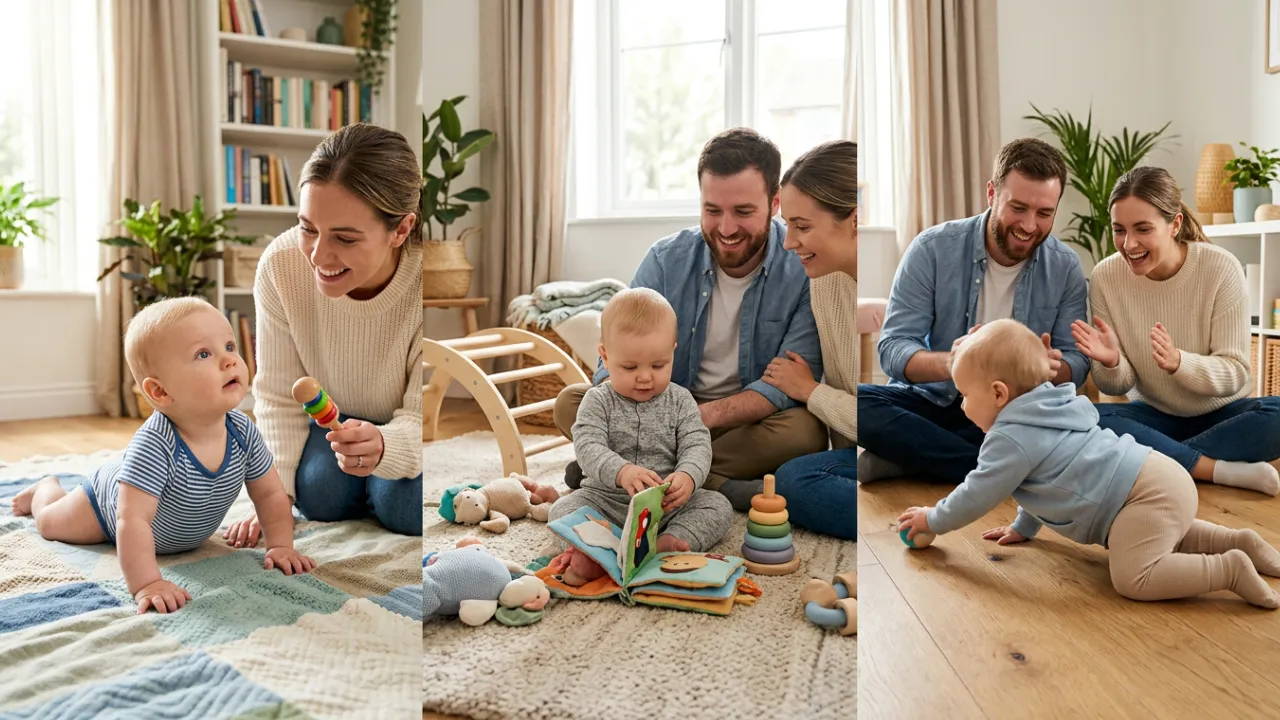
It's important to provide appropriate stimulation for each stage of a baby's development . Simple games on the floor, with sensory mats or colorful objects, stimulate motor and cognitive development in a safe and fun way.
Baby Development Milestones: The Second Trimester
The second half of the year is full of discoveries for your baby. At this stage, cognitive development and mobility become more complex. You will see your child interacting more actively with the world around them.
The stages of growth require attention to new forms of exploration. The baby ceases to be a passive observer and begins to seek out objects and people. Observing these changes helps to celebrate each achievement and understand your child's new learning needs.
Among the milestones of the second semester, motor skills that increase independence stand out. It's common to see the baby sitting without support and moving around on the floor. See below the main expected skills:
- To sit firmly without needing constant support.
- Crawling or dragging oneself to reach distant toys.
- To stand up using furniture or your hands for support.
- Showing a preference for specific objects and familiar people.
To better understand these phases, see the table below for common expectations for this period:
| Age (Months) | Motor Skills | Social interaction |
|---|---|---|
| 6 to 8 months | Sit without support | Recognizes family members |
| 9 to 10 months | Crawls with agility | Points to objects |
| 11 to 12 months | Steps with support | Imitates simple gestures. |
Every child grows in a unique way. These Baby Development Milestones are a general guide. The most important thing is to create a safe and stimulating environment so that your child can explore the world with confidence. Enjoy every moment of this journey of growth.
Visual checklist of essential stimuli by phase.
Transform routine into moments of discovery with this practical activity guide. A developmental checklist helps you track your child's achievements, making everything more organized and easier.
See a table with suggestions for stimulating babies by age group. These activities improve your child's motor and cognitive skills.
| Phase (Months) | Focus of the Stimulus | Suggested Activity |
|---|---|---|
| 0 to 3 months | Sight and hearing | Colorful mobiles and soft sounds |
| 4 to 6 months | Motor coordination | Toys with varied textures |
| 7 to 12 months | Space exploration | Stacking and crawling games |
Following these stimulation tips creates an enriching environment. Remember, each child grows uniquely. The most important thing is the quality of interaction you provide.
Safety tips during exploration
Before starting any playtime, the baby's safety is essential. A safe environment allows the little one to explore freely and confidently.
- Keep small objects out of reach to avoid choking hazards.
- Protect the corners of your furniture with silicone protectors.
- Check if the toys have a quality certification seal.
- Avoid leaving electrical wires exposed in high-traffic areas.
By using this developmental checklist , you promote healthy growth. Always prioritize your baby's safety when exploring new games. With these stimulation tips , you provide the best stimuli for babies at each stage.
Warning signs and when to see a pediatrician.
It's essential to know when to seek professional help for your child's well-being. Every child grows up uniquely. But there are signs that indicate it's time to seek a specialist.
Comparing your child's development to others can cause anxiety. But, most importantly, your baby's health is paramount. A pediatrician is the right professional to assess each case.
Here are some signs that may indicate the need for closer monitoring. The main warning signs in children are:
- Loss of skills that the child had previously acquired.
- Prolonged absence of expected milestones for the age group.
- Persistent difficulty maintaining eye contact or interacting with the environment.
- Significant changes in muscle tone or in response to auditory stimuli.
Speaking openly with your baby's pediatrician is very helpful. This professional can distinguish between normal variations and delays that require attention. They offer the necessary support to your family.
Conclusion
Following the growth of babies is a journey full of discoveries. It takes patience and attention to the signs they give every day.
Focusing on your child's progress helps avoid comparing them to others. Every child learns in a unique way.
A healthy environment helps with growth and emotional security. Value each achievement, as they are fundamental to your baby's future.
Pediatricians and specialists are ready to help. Don't be afraid to seek help if you have any questions or notice anything unusual.
Enjoy every moment of this special phase of life. Your role is to provide encouragement and lots of love along the way.
By clicking the button you will remain on this site.
FAQ
What exactly are the milestones of child development?
Developmental milestones are behaviors and skills that children typically show at certain ages. They help you see how your child is developing. This includes everything from motor coordination to language and how they interact with others.
Is it normal to feel anxious if my baby takes longer to reach a milestone than a friend's baby?
Yes, many mothers feel anxious. But it's important not to compare your child to others. Every child grows uniquely. What matters is your child's progress, not what others are doing.
What are the main milestones expected for a baby in the first six months of life?
In the first six months, your baby will show great progress. He or she will begin to hold their head up, roll over, and smile. These are important steps toward interacting and communicating with you.
What changes in a baby's development during the second trimester?
At this stage, the baby becomes more mobile and curious. He will learn to sit, crawl, and try to stand. Mental development also progresses, with the baby exploring objects more actively.
How can I safely provide stimulation for babies at home?
Use a checklist of safe activities for your baby. This can include reading and playing on the floor. But remember to follow safety rules so that your baby learns safely.
What signs indicate that it's time to see your baby's pediatrician because of a delay?
If the baby loses a skill or doesn't want to interact, it's time to go to the pediatrician. The doctor will check if the baby is on the right track or if they need special help.
How does the Child Health Booklet help monitor these milestones?
The Child Health Record is very important. It helps to record your baby's development. This way, you and the pediatrician can discuss your child's progress.