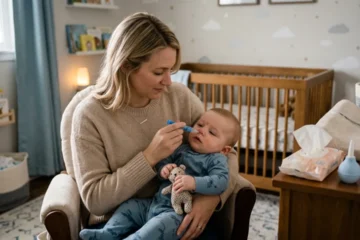
A Guide to Understanding and Stimulating Your Baby's Development
The arrival of a child changes everything at home. Witnessing each small milestone requires a lot of care and love from the parents.
Understanding the stages of development helps you know what your child needs. This allows you to provide the best support at each stage.
This Development Guide shows you how to help your child grow up healthy. You'll find practical tips for everyday life.
Learning how to stimulate your baby from an early age helps strengthen the bond. Use these tips to create a safe and enriching learning environment for your child.
Main Learning
- Follow the stages of growth with patience and love.
- Pay attention to the signs your child shows daily.
- Provide appropriate support according to the child's age.
- Create a stimulating learning environment.
- Strengthen the emotional bond through daily interactions.
Understanding the Stages of Baby Development
Childhood growth is a fascinating journey. It transforms your baby every day. By observing your child, you will see that development occurs in natural cycles.
The stages of a baby's development are marked by intense changes. In the first few months, the baby adapts to the world and strengthens emotional bonds. Over time, the baby begins to explore its environment more actively.
Identifying developmental milestones helps you monitor your child's progress. These milestones serve as a guide to providing the necessary support. Remember, every child grows uniquely, but understanding overall development is essential.
Below, we present an overview of the main stages of growth to facilitate your daily monitoring:
| Phase | Approximate Age | Focus of Development |
|---|---|---|
| Newborn | 0 to 3 months | Adaptation and basic reflexes |
| Business Operation | 4 to 8 months | Motor control and social interaction |
| Discovery | 9 to 12 months | Mobility and onset of speech |
| Independence | 1 the 2 years | Autonomy and fine motor coordination |
Analyzing these phases helps in dealing with constant changes. Childhood growth involves more than just gaining weight or height. Value each achievement, as they are the foundation for your child's future.
Staying informed about your child's growth transforms the experience of caring for them. A baby's development is an ongoing process that requires patience and constant attention. Enjoy every moment of this unique journey of learning and discovery alongside your little one.

How to identify the stages of baby development.
Identifying developmental milestones is essential for healthy growth. By observing your child, you notice small achievements. This shows that he or she is growing as expected.
It's important to focus on areas such as motor coordination, social interaction, and communication. A baby's development isn't linear, but there are clear signs that they're ready for new challenges. Keeping a diary or using tracking apps helps to record these changes.
Healthy development shows curiosity and responsiveness to stimuli. When a baby follows objects with their eyes or reacts to familiar sounds, it's a positive sign. This indicates that the neurological and physical systems are progressing well.
Below is a table outlining the expected milestones to help you track the stages of growth:
| Age | Motor development | Social interaction | Communication |
|---|---|---|---|
| 0 to 3 months | Lift your head when you lie down. | Social smile | It emits guttural sounds. |
| 4 to 6 months | It rolls from side to side. | Recognizes familiar faces | Babbles syllables |
| 7 to 9 months | Sit without support | Shows a preference for parents. | He understands his own name. |
| 10 to 12 months | Start taking steps | Imitates simple gestures. | Speak your first words |
Each child grows in a unique way. The focus is always on well-being and constant stimulation. This ensures healthy development in a safe environment. If there is a delay, it is important to consult a pediatrician.
Step-by-step guide to stimulating motor development
Did you know that small daily activities can transform your child's motor development? Physical growth is a fundamental stage. You have an active role in learning how to stimulate your baby through simple and effective play.
Early stimulation does n't require expensive or complex equipment. By focusing on targeted movements, you help strengthen your little one's muscles and coordination in a natural and fun way.
To make this journey easier, we've prepared a practical guide with suggestions you can apply at home. These activities aim to improve the essential motor skills for each stage of growth:
- Time spent lying on your stomach: Supervise the baby while he or she rests on their tummy to strengthen their neck and shoulders.
- Reach of objects: Place colorful toys within a short distance to encourage the baby to stretch their arms and roll over.
- Tactile exploration: Use fabrics with different textures to promote sensory stimulation and surface recognition.
- Bicycle exercises: Lay the baby on their back and gently move their legs in a circular motion to prepare their lower limbs.
By integrating these practices, you promote a solid foundation for the future. Remember that early stimulation should always be a time of connection and joy between you.
Sensory stimulation also plays a vital role in development. By providing visual, auditory, and tactile stimuli, you broaden your child's perception of the world around them.
Following this practical guide helps to monitor the progress of motor skills more safely. Continue to stimulate the baby patiently, always respecting each child's individual pace.
Strategies to stimulate language and cognition
Did you know that small daily interactions can make a big difference to your child? Consciously stimulating your baby helps create important neural connections. This is essential for reasoning and creativity. By spending time on these activities, you are building a solid foundation for the future.
Early stimulation doesn't require expensive toys or complicated methods. Children's learning happens primarily through the time you spend with them. Talking, singing, and reading stories are powerful tools you already have at home.
To stimulate children's language development, try doing a few simple things in your daily routine:
- Narrate your actions while caring for the baby, describing what you are doing.
- Read picture books using intonation, pointing to the pictures and naming the objects.
- Respond to your child's babbling as if you were having a real conversation.
- Sing children's songs and repeat rhymes to help with sound perception.
Cognitive development also improves when you encourage your child's curiosity. Let them explore different textures, sounds, and colors in a safe environment. This active exploration helps the child understand the world around them.
Remember that consistency is key. By stimulating your baby with patience and affection, you strengthen the emotional bond. This also enhances intellectual abilities. Early stimulation is a valuable investment that will yield positive results throughout life.
Children's language skills develop rapidly when parents are actively involved. By transforming routine moments into learning opportunities, you help your child develop essential skills in a natural and enjoyable way.
How to deal with the challenges of each stage.
Each stage of your child's growth brings unique challenges. They require patience and strategy. You may feel overwhelmed when your little one's behavior changes suddenly. But maintaining emotional balance helps you get through these periods more easily.
To effectively manage the challenges of growing up , follow a simple roadmap. Prioritize calm. The focus should be on the quality of parent-child interaction . Transform moments of agitation into opportunities for mutual learning.
Below is a step-by-step guide to maintaining peace of mind. This way, you can ensure the best care for your baby :
- Observe the signs: Determine if the restlessness is caused by sleepiness, hunger, or a need for attention.
- Maintain the routine: Predictability is a powerful tool for... baby's well-being during transitions.
- Practice active listening: Even if the baby doesn't speak, nonverbal communication strengthens the bond. parent-child interaction.
- Take care of yourself: Remember that your emotional state directly reflects on... baby care.
When facing the challenges of growth , remember that each phase is temporary. Prioritizing the baby's well-being through constant and loving presence is the safest path. This way, you ensure healthy and happy development.
Creating an environment conducive to growth
The environment where your child lives is very important for their development. Planning each room helps create a balanced environment, allowing the child to explore the world safely.
For a safe environment, remove hazards such as sharp furniture edges and exposed electrical outlets. This allows the baby to move freely, which is essential for their development.
Caring for a baby goes beyond feeding and hygiene. The quality of the physical space is important. Reserve areas for activities that stimulate the senses, such as sensory mats. These choices help with daily interaction and learning.
Below is a table with suggestions on how to organize different areas of the house to promote child development:
| Home Zone | Focus of the Stimulus | Safety Tip |
|---|---|---|
| Living room | Free motor exploration | Corner protectors for furniture |
| Baby's Room | Sleep and tranquility | Avoid overloading the crib with too many objects. |
| Play Area | Cognitive development | Non-slip rubber mats |
| Kitchen/Common Area | Observation and socialization | Locks on cabinets and drawers |
Keeping the house organized doesn't mean depriving the child of experiences. It's about offering a safe environment for exploration. This makes interaction between parents and children easier. A safe environment promotes curiosity and the emotional well-being of your child.
Conclusion
This Development Guide prepares you to proudly watch each of your child's milestones. Every child's growth is unique. It requires attention to the details of everyday life.
Childhood learning is a never-ending process. It requires patience, love, and constant observation. Every small victory, like the first smile or the first steps, is an important milestone.
It is essential to take care of the baby's well-being at all stages. This ensures that he or she grows up in a nurturing environment. This care helps them explore the world safely and with curiosity.
Maintain the emotional connection with your little one. The support you give them today helps build their self-confidence for adulthood. Enjoy every moment of this journey alongside those you love most.
FAQ
What are the main stages of a baby's development that I should monitor?
A baby's growth follows a predictable path. It begins at birth and continues through the first few years. It's important to observe milestones, such as the sucking reflex and the first steps. A developmental guide helps you know what to expect at each stage.
How can I safely identify development stages?
To know if your child is growing well, observe the signs of progress. This includes motor, social, and cognitive skills. This way, you'll know when they are ready to learn new things.
What is the best way to stimulate your baby to improve their motor skills?
Simple exercises are great for stimulating your baby. For example, placing them on their tummy and offering toys they can reach. This helps strengthen their motor skills. It's also important to stimulate their senses so they understand the world around them.
How does parent-child interaction influence cognitive development and children's language?
Constant conversation with your child is essential for learning. Reading stories from an early age also helps a lot. These actions stimulate the baby's language and cognitive development.
What can be done to cope with the challenges of growth at each new stage?
In difficult times, patience is key. Understanding that these challenges are normal helps a lot. Maintain a routine and offer emotional support to your baby.
How can you organize your home to promote healthy and safe development?
For a safe environment, organize your home with your baby's growth in mind. Use furniture that allows for exploration and resources that stimulate the senses. This way, you create an ideal space for your child's development.